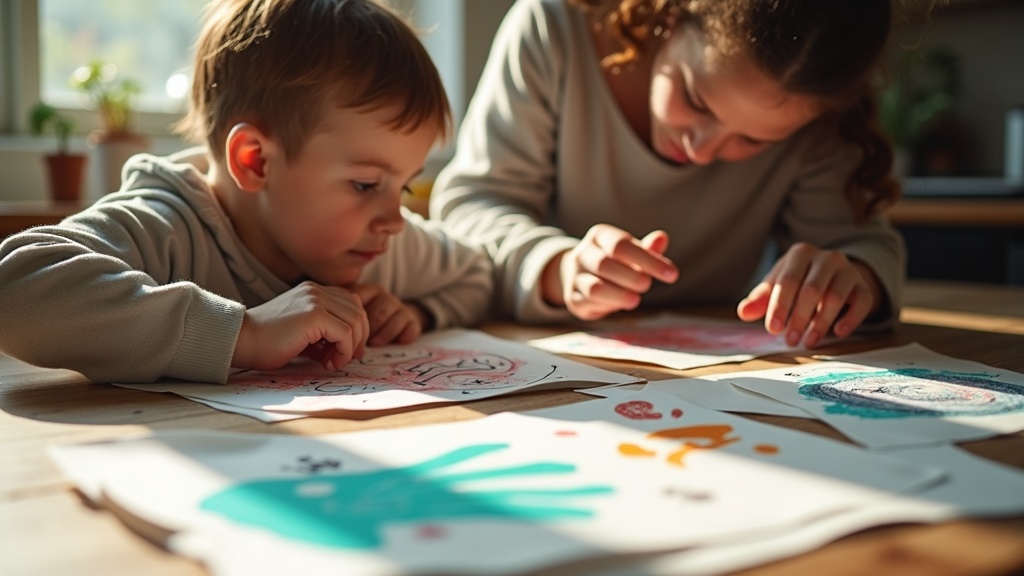
If you have kids, you know the feeling. They come home from school with another painting, another clay sculpture, another construction paper masterpiece covered in glitter and pride. You want to treasure every single one because each piece captures a moment in time you’ll never get back.
But then reality sets in. The kitchen counter disappears under a mountain of artwork. The refrigerator door can’t hold another magnet. Closets overflow with boxes you meant to organize months ago. You feel torn between honoring your child’s creativity and reclaiming your living space.
Here’s the good news: preserving children’s artwork doesn’t mean keeping everything forever or turning your home into a storage unit. It also doesn’t require fancy equipment, expensive services, or hours of complicated work.
You can create a system that actually works for your family. One that keeps the pieces that truly matter, celebrates your kids’ creative spirit, and gives you back your countertops. The key is finding simple methods you’ll actually use, not perfect solutions that sound great but never happen.
Whether you want to create memory books, go digital, or find creative ways to display rotating favorites, there are plenty of practical options you can start today. Most take just a few minutes and use things you already have at home. The goal isn’t to archive every crayon scribble. It’s to preserve the joy and the memories in ways that fit into real life.
Choose what to keep without feeling guilty
The hardest part of preserving children’s artwork isn’t finding storage space. It’s deciding what deserves a spot in the first place. You don’t need to save everything, and trying to will only make the whole project feel overwhelming.
Look for pieces with a clear signal. First attempts at writing their name, a drawing that tells a story you remember, something that shows a big leap in skill, or anything your child asks about months later. These are keepers. If a piece makes you smile or captures a specific moment in their development, it probably matters.
On the flip side, some things are easier to let go. Duplicate drawings of the same subject, worksheets with minimal personal touch, or projects your child doesn’t even remember making. If it feels like clutter rather than memory, it probably is.
Try this habit: at the end of each week or month, go through the pile together. Let your child pick their top two or three favorites. You can add one or two of your own. Before you file anything away, flip it over and write a quick note on the back. Just one line. Their age, the date, or why it mattered. A year from now, that context will be gold.
The goal isn’t to keep the most art. It’s to keep the pieces that actually mean something. Ten drawings with stories attached will always matter more than a bin full of forgotten papers. Preserving children’s artwork is about meaning, not volume. Give yourself permission to be selective, and the whole process becomes lighter.
Keep a single physical memory box per child
The simplest way to keep physical artwork without drowning in paper is to give each child one box. That’s it. One container with a lid, stored on a shelf or under a bed. When the box is full, it’s full.
This boundary sounds strict, but it actually makes preserving children’s artwork easier. You’re not saying no to everything. You’re saying yes to the pieces that really matter, the ones that make you smile or capture something true about your child at that age.
Flat pieces work best in a box. Drawings, paintings, report cards, handwritten notes, and birthday cards all fit nicely. You can tuck them into large envelopes or inexpensive folder pockets to keep them from getting crumpled. If you want to go one step further, a simple three-ring binder with plastic sleeves keeps everything visible and protected.
A few small three-dimensional crafts can go in too, but be picky. That clay handprint or the painted rock they made at camp might be worth saving. The sixteenth popsicle stick creation probably isn’t.
Set a rhythm for sorting through the box so it doesn’t become a dumping ground. The end of the school year works well. So does their birthday, or the start of each season. Sit down with your child if they’re old enough and let them help decide what stays. You’ll be surprised by what they remember and what they’ve already outgrown.
The box isn’t about saving everything. It’s about saving enough.
Turn loose art into a simple memory book
Instead of keeping every drawing in a pile, try turning your favorites into an actual book that you and your kids can flip through together. The trick is to let go of perfection and focus on creating something you’ll actually use.
Start by picking a simple theme that makes sense for your family. You might gather all the art from one school year, or collect pieces from a particular season when your child was obsessed with dinosaurs or unicorns. The theme doesn’t have to be fancy. It just helps you decide what goes in and what doesn’t.
Choose a small number of pieces that really capture that time. Five to ten works well. You’re not trying to save everything, just the ones that make you smile or tell a story.
Now for the format. A three-ring binder with clear plastic sleeves works beautifully because you can slide the art right in without damaging it. If you want something more permanent, a blank notebook or journal lets you tape or glue pieces directly onto the pages. You can even fold larger drawings to fit, or just include a photo of oversized work. Some parents like making simple stapled booklets, which feels more like a real storybook.
The magic happens when you add a few words next to each piece. Write down what your child said about the drawing, how old they were, or why this particular artwork mattered. These little captions turn random pictures into actual memories. Years later, those notes will mean as much as the art itself.
Kids love looking through these books, especially when they can see how their skills changed over time. It’s archiving art in a way that feels alive, not stored away in a box somewhere.
Use a display-and-rotate routine so everything gets its moment
Here’s the thing about displaying kids’ artwork: it matters. When children see their creations on the wall or fridge, they feel proud and noticed. But if you hang everything, you’ll quickly run out of space and end up with a chaotic collage that overwhelms the room.
The solution is a simple rotation system. Pick one consistent spot in your home—maybe a section of the fridge, a wall in the hallway, or a corner of the kitchen. Display just a few pieces at a time. Three to five works usually feels right.
Set up a small box or folder near that display area to serve as an inbox for new art. When your child brings something home, it goes straight into the inbox. No decisions needed yet.
Then pick a rotation day. Once a week or once a month, take down what’s currently displayed and bring out something new from the inbox. Before you remove the old pieces, snap a quick photo with your phone. This takes seconds and creates a permanent record.
Now comes the decision point. Look at each piece you’re taking down and ask yourself: does this need to be kept physically, or is the photo enough? Most of the time, the photo is plenty. You can recycle the original without guilt because you’ve already preserved it digitally.
For the rare pieces that truly stand out—the ones with special effort or meaning—tuck them into a dedicated storage box. But be honest and selective. The goal isn’t to save everything. It’s to honor everything while keeping only what truly matters.
This routine turns preserving children’s artwork into a manageable habit instead of an overwhelming task. Your child gets recognition, you maintain control over clutter, and nothing important disappears into a forgotten pile.
Preserve the story, not just the paper
Twenty years from now, you won’t remember why your daughter drew seventeen purple cats or what your son meant by that wobbly orange blob. The artwork itself might spark a smile, but the story behind it? That’s what turns a random scribble into a genuine family keepsake.
The good news is you don’t need to write essays or keep detailed journals. Just spend ten seconds adding a few quick notes while the moment is fresh. Flip the artwork over and jot down the date, your child’s age, and maybe one sentence they said about it. That’s often enough.
If you want a bit more context, try asking simple questions like “Tell me what’s happening here” or “Who are these people?” You’ll be amazed at the stories that spill out. A blue squiggle becomes “the day we saw dolphins,” and suddenly you remember that beach trip in vivid detail.
Note the occasion when it matters. First day of kindergarten. The week after grandma visited. When the family got a new puppy. These tiny details make all the difference when you’re flipping through old artwork years later.
Your notes don’t have to live on the artwork itself. Stick a Post-it on the front before filing it away. Or if you’re going the digital preservation route, add the story right in the photo caption or file name. Future you will be grateful you took five seconds now to capture what made this particular drawing special.
You don’t need to document everything. Just the pieces that already feel meaningful, or the ones where your child clearly has something to say. Trust your instincts and keep it simple.
Deal with bulky and fragile creations in a practical way
Big creations are the hardest to handle. That cardboard spaceship or papier-mâché dinosaur might be your child’s proudest work, but it also takes up half the living room. The good news is you don’t have to keep everything in its original form to preserve the memory.
Start by letting bulky items dry completely before you make any decisions. Wet paint, glue, or clay can mold or fall apart if you box things up too soon. Give pieces a few days in a safe spot where they won’t get knocked over. This buys you time to think without rushing.
Photography is your best friend for oversized art. Take pictures from several angles so you capture the details your child cared about. Get close-ups of painted faces, glued-on features, or anything they spent extra time on. These photos become the keepsake while the physical object can eventually go.
If you want to keep something three-dimensional, choose one standout piece per season or school year. Store it somewhere accessible but out of the way, like a high closet shelf or under a bed in a clear bin. Seeing one special sculpture is more meaningful than a pile of crumbling projects.
For pieces you can’t fully keep, consider saving just a small signature part. Cut out a painted cardboard panel, keep the clay handprint, or remove a labeled section that shows your child’s name and age. These fragments take up almost no space but still carry the emotional weight of the original creation. Sometimes a piece of something matters more than a photo of everything.
Make it a heritage project by sharing copies
Here’s a secret that makes preserving children’s artwork so much easier: you don’t have to keep the original of everything if you share copies with people who love your child. Grandparents, aunts, uncles, and close friends often treasure these little glimpses into a child’s world just as much as you do.
Start simple. Once a month, snap photos of your favorite pieces from that period and text them to grandparents with a quick note about what inspired the drawing. Or create a shared photo album on your phone that family members can check whenever they want. Most phones let you do this without any special apps or accounts.
If you want something more tangible, print a few standout pieces at home or at any drugstore and mail them as surprise gifts. A drawing tucked into a birthday card or sent just because makes people smile. It also gives the artwork a second life beyond your refrigerator door.
The beauty of sharing copies is that it takes pressure off you to save every single thing. When you know that Grandma has a photo of that rainbow painting or Uncle Joe got a copy of the dinosaur masterpiece, it’s easier to let go of the physical paper. You’re not erasing the memory. You’re spreading it around.
Over time, these small acts of sharing become part of your family’s story. Years later, relatives might surprise you by remembering specific drawings or pulling up old photos you’d forgotten about. That’s when preserving children’s artwork stops feeling like a chore and starts feeling like something richer, a way of weaving your child’s creativity into the wider fabric of family life.